
Custom electronics for a solar-powered weather station
Baztech’s weather-station project combines solar power, battery storage and a custom PCB development board. An ESP32 serves as the main controller, with a SIMCom A7670G PCIe-format cellular module integrated into the board setup.
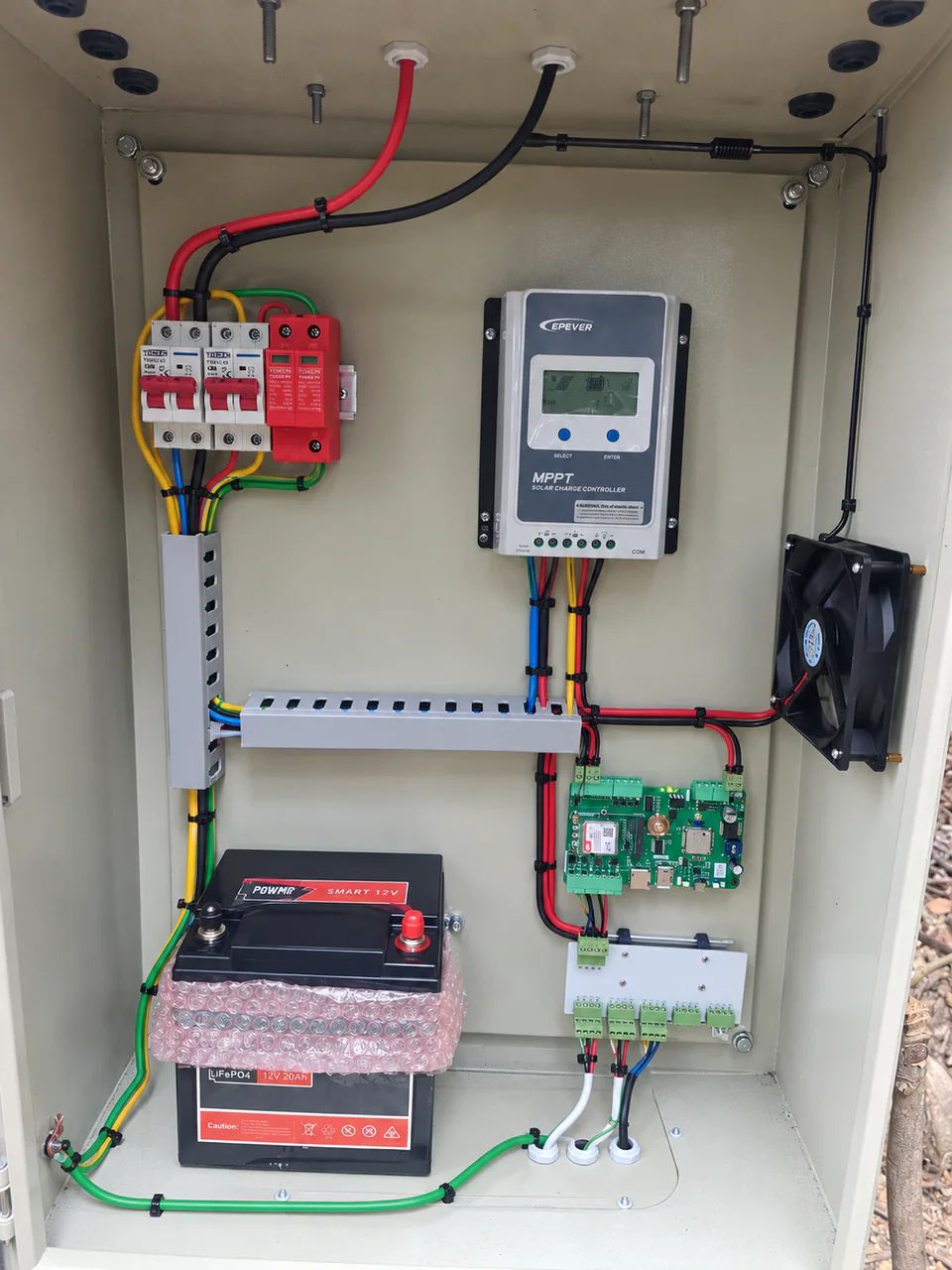
The power system uses a solar panel and an EPEVER solar charge controller together with a PowMr 12V LiFePO4 battery. The uploaded cabinet image shows the charge controller, battery, custom electronics and routed wiring within the enclosure.
Bringing power and connectivity into one installation
The integration brings together the station’s power supply and control electronics. The solar panel supplies the charging system, the charge controller manages the solar-power stage, and the battery provides stored energy for the station. The ESP32-based custom board provides the main control layer, while the SIMCom module provides the cellular-connectivity layer.
These elements form the hardware foundation of the weather station. Sensor selection, data interfaces and reporting requirements are defined around the intended monitoring application.
Planning a weather-station project in Malaysia
For a similar project, share the installation location, weather parameters to measure, selected sensors, cellular coverage and required reporting interval. Solar-panel sizing and battery capacity can then be assessed against the station’s load and operating schedule.
Baztech can discuss custom PCB development, embedded-controller integration and the solar-power arrangement as one project scope.
Questions about this integration
What is the main controller?
The project uses an ESP32 as the main controller on a custom PCB development board, with a SIMCom A7670G cellular module in the setup.
Which battery and solar charge controller are used?
The supplied project uses a PowMr 12V LiFePO4 battery and an EPEVER solar charge controller connected to the solar panel.
Can the same hardware be used for another weather station?
It can form the starting point for a new integration. The sensors, power demand, cellular coverage and reporting requirements need to be assessed for the new location.